
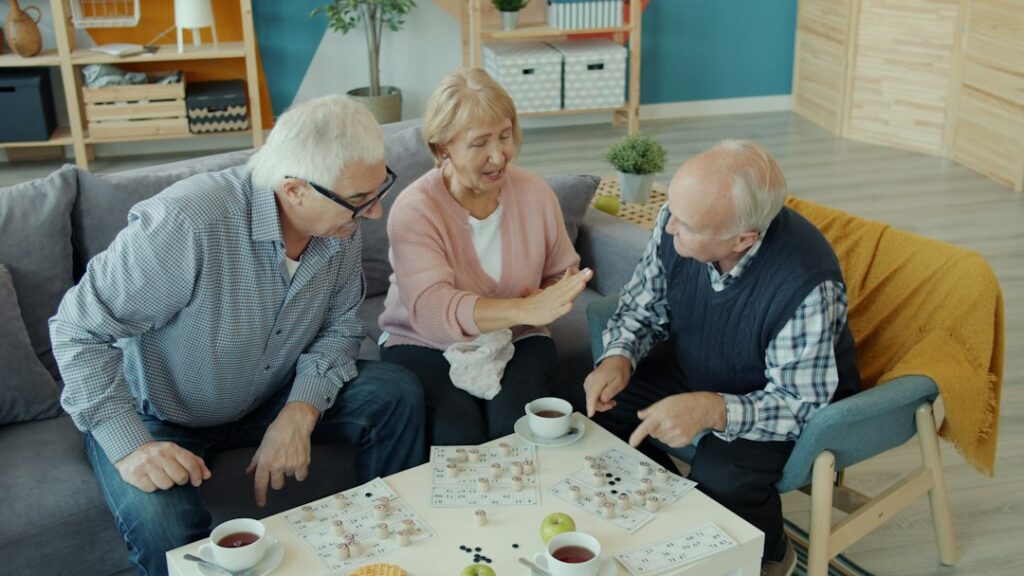
What kinds of activities are available in assisted living?
Assisted living communities typically offer a mix of social, physical, creative, educational, spiritual, and recreational activities. The goal is not to keep residents busy every minute, but to provide opportunities for connection, movement, purpose, enjoyment, and personal choice.
A well-rounded activity program may include:
- Group exercise, stretching, balance practice, or walking
- Card games, puzzles, trivia, and board games
- Music programs, sing-alongs, and dancing
- Art, crafts, gardening, and seasonal projects
- Reading groups, discussion circles, and educational talks
- Movie afternoons and resident-selected entertainment
- Religious or spiritual gatherings for those who want them
- Community outings, shopping trips, or visits to parks and cultural sites
- Social gatherings for birthdays, holidays, and special events
- Quiet activities such as reading, journaling, knitting, or listening to music
The most useful programs offer variety. Some residents prefer lively group events, while others enjoy smaller gatherings or independent activities in a quiet setting.
How do activities benefit older adults?
Regular activities can support emotional well-being, physical function, cognitive engagement, and social connection. They may also help residents maintain familiar routines after moving from a private home into a shared community.
Social activities can reduce isolation by creating natural opportunities to talk with neighbors and develop friendships. Physical programs may support strength, flexibility, balance, and confidence with everyday movement. Mentally engaging activities can encourage memory, attention, problem-solving, and conversation.
Activities also provide a sense of purpose. A resident may enjoy helping prepare decorations, choosing music for an event, tending plants, welcoming a new neighbor, or sharing knowledge about a favorite subject. These roles can be just as meaningful as organized entertainment.
Participation is not required for an activity program to be valuable. Knowing that an event is available can give residents structure and choice, even when they decide to spend the afternoon privately.
Are assisted living activities appropriate for different ability levels?
They should be. Effective recreation programs are adapted so residents with different mobility, hearing, vision, memory, and communication needs can participate as comfortably as possible.
For example, a movement class may include seated and standing options. A craft activity may provide larger materials or simplified steps. A trivia program may use larger print, microphones, written prompts, or extra time for responses. Music programs can be enjoyable even for residents who do not want to sing or speak.
Residents with memory loss may benefit from familiar songs, sensory activities, simple games, photo discussions, and predictable routines. A person who does not enjoy large groups might prefer one-to-one conversation, a small activity table, or independent use of a community room.
Families can ask whether activities are adjusted for:
- Wheelchair users and residents with limited balance
- People with hearing or vision changes
- Residents living with dementia or other cognitive changes
- Individuals who tire easily or need frequent rest periods
- People who communicate through gestures, writing, or assistive devices
The purpose is participation at an appropriate level, not performance.
What should families ask about the activity calendar?
A monthly calendar can show the number of scheduled events, but it does not always explain how activities work in practice. Families may want to ask how residents help choose programs and whether the schedule changes based on participation and feedback.
Useful questions include:
- Are activities offered every day, including weekends?
- Are there morning, afternoon, and evening options?
- How are residents informed about schedule changes?
- Can residents suggest activities or lead a discussion?
- Are transportation-based outings available, and how often?
- Are there activities for people who prefer small groups?
- What happens when an event is canceled?
- Are supplies and equipment provided?
- Can residents participate independently outside scheduled times?
- How are activities adapted for changing health or mobility needs?

It is also helpful to ask whether the calendar describes actual activities or uses broad labels. “Exercise” might mean chair stretching, walking, balance practice, or a more active class. “Social hour” could involve conversation, music, refreshments, or a structured game.
How do seasonal conditions affect recreation in McMurray?
Seasonal weather can influence how often residents spend time outdoors. In McMurray, winter cold, snow, ice, and early darkness may make indoor recreation especially important during parts of the year. Safe indoor walking routes, exercise programs, music, games, and creative projects can help maintain routine when outdoor activities are limited.
During spring and summer, residents may enjoy patios, gardens, shaded seating areas, outdoor concerts, nature observation, or short walks when conditions are comfortable. Warm-weather planning should include shade, hydration, rest areas, and attention to heat.
Autumn can bring opportunities for seasonal crafts, decorating, indoor gardening, cooking demonstrations, and discussions connected to local traditions. Outdoor access should always account for uneven surfaces, wet leaves, temperature changes, and the resident’s ability to walk safely.
A strong recreation program does not depend entirely on good weather. It offers indoor alternatives so residents do not lose opportunities for movement and social contact during difficult conditions.
Can residents continue hobbies from home?
Often, yes. Familiar hobbies can make a move feel more personal and may help residents connect with others who share similar interests. A person who enjoyed sewing, woodworking, painting, photography, cooking, sports, music, puzzles, or gardening may be able to continue in an adapted form.
Families should ask about available space, storage, supervision, and safety rules. Certain tools, heating devices, sharp objects, or electrical equipment may require restrictions. Those limits are usually related to fire prevention, fall risk, or the safety of other residents.
Personal hobbies can also become group activities. A resident who enjoys history might lead a conversation. Someone with gardening experience might help with container plants. A former teacher, musician, mechanic, or cook may enjoy sharing knowledge informally.
The activity does not have to look exactly as it did at home to remain meaningful.
What if a resident does not want to join group activities?
Refusing activities is not necessarily a sign that something is wrong. A resident may be tired, uncomfortable in crowds, unfamiliar with the group, or uninterested in that particular event. Some people need time to adjust before participating.
Staff and families can look for the reason behind the reluctance rather than treating it as a problem. A resident may respond better to a one-to-one invitation, a smaller group, a familiar hobby, or an activity connected to a previous routine.
Changes in participation deserve attention if they are sudden or accompanied by sadness, confusion, pain, fatigue, withdrawal, or changes in appetite and sleep. In those situations, the concern may involve health, medication effects, hearing difficulty, depression, or difficulty adjusting to a new environment.
Meaningful recreation is based on choice. Quiet time, conversation with one trusted person, watching a favorite program, or sitting outdoors can all be valid forms of engagement.
How can families support an activity routine?
Families can share practical information about a resident’s interests, past work, favorite music, cultural traditions, former hobbies, and preferred social settings. Specific details are more useful than a general statement such as “likes activities.”
A family member might provide labeled photographs, large-print books, familiar music, craft materials approved by the community, or conversation topics connected to the resident’s life. Visiting during an activity can also make participation easier, especially during the adjustment period.
The most suitable program is one that respects the resident’s preferences, accommodates changing abilities, and offers both social opportunities and personal space. Recreation in assisted living is not simply entertainment; it is part of daily life, identity, health, and belonging.
